A buyer-side account of searching for bangkirai on GTH, requesting quotes, checking compliance documents, and receiving a shipment in Rotterdam.
The Buyer’s Perspective A Dutch timber importer needs to source certified Bangkirai decking for a major construction project. The specifications are straightforward but precise: 25 × 145 mm, E4E profile, with random lengths ranging from 2.4 to 5.7 metres.
Since the introduction of the EUDR, regulatory compliance has become a fundamental requirement rather than an optional consideration. In the past, the company relied on a local intermediary in Indonesia who charged a 5–8% commission and handled communication with the manufacturer, along with basic quality inspections.
For this purchase, however, the importer decides to source suppliers directly through catastico.eu and use GTH to manage the procurement process from supplier selection through shipment. Searching for Suppliers Using the platform, the buyer applies the following search criteria:
Species: Bangkirai (Shorea laevis) Thickness: 25 mm Width: 140–150 mm Country of origin: Indonesia Availability: Ready to ship
The search returns four matching suppliers. Each listing clearly displays the product grade, moisture content, delivery lead time, and certification status.
Two of the four suppliers already hold valid SVLK/V-Legal certification, immediately narrowing the shortlist. Requesting Quotations The importer sends the same Request for Quotation (RFQ) to both shortlisted suppliers, requesting:
60 m³ of Bangkirai E4E decking Moisture content: 12–14% One full container load CIF Rotterdam
The first quotation arrives within 18 hours, while the second follows approximately 30 hours later.
Both suppliers provide detailed quotations, including available dimensions, packaging specifications, and estimated ocean freight costs. Evaluating the Offers The two quotations differ in price by approximately 4%. Price, however, is not the deciding factor.
One supplier includes a provisional packing list with the quotation and confirms that the material is already prepared for shipment. The second simply states, “Goods available upon request.” The ability to ship immediately gives the first supplier a clear advantage.
Following a single round of negotiations, the purchase price remains unchanged, but the parties agree on improved payment terms:
30% advance payment 70% against a copy of the Bill of Lading, replacing the previous 50/50 payment structure
The order is then confirmed. EUDR Documentation Once the order is opened, the supplier uploads all supporting compliance documents directly to the platform, including:
FLEGT licence (where applicable) SVLK/V-Legal certification Geolocation coordinates of the harvesting area Declaration of origin referencing the forestry concession
All documents are stored within the same order file and are available for download as PDFs.
For the importer, this significantly simplifies the due diligence process. Instead of spending weeks requesting documents from multiple contacts via email, all required information is available in one location.
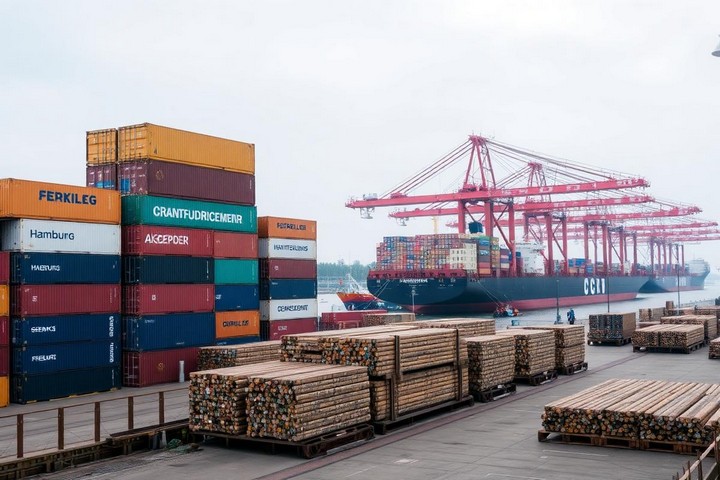
As a result, the Due Diligence Statement (DDS) can be completed within three business days after customs clearance. Shipment and Delivery The container is loaded at the Port of Semarang. After a 42-day voyage, it arrives in Rotterdam.
Throughout the shipment, GTH automatically updates the order status:
Container loaded Vessel departed Arrived at destination port
During the final inspection, the shipment fully matches the agreed specifications:
Dimensions are correct Moisture content falls within the specified range Only one securing strap is damaged during transport No damage to the timber is found
No claim is submitted. Best Practices for Buyers
Prepare detailed RFQs. The more specific the request, the easier it is to compare quotations and avoid misunderstandings. Review EUDR documentation before negotiating price. Confirming compliance early prevents delays and strengthens your negotiating position. Understand the difference between “Ready to Ship” and “Production Capacity.” Ready-to-ship inventory may be available within 2–4 weeks, while new production often requires 8–14 weeks. Always verify certifications. Even when working with verified suppliers, buyers should confirm that all certificates remain valid before placing an order.
Conclusion GTH does not replace the importer’s role in the purchasing process. Instead, it makes procurement more transparent, efficient, and easier to manage by bringing supplier discovery, quotations, compliance documentation, and shipment tracking together in a single, verifiable platform.
For companies operating in the international timber trade under the EUDR, this centralized approach to sourcing and compliance is one of GTH’s greatest advantages.